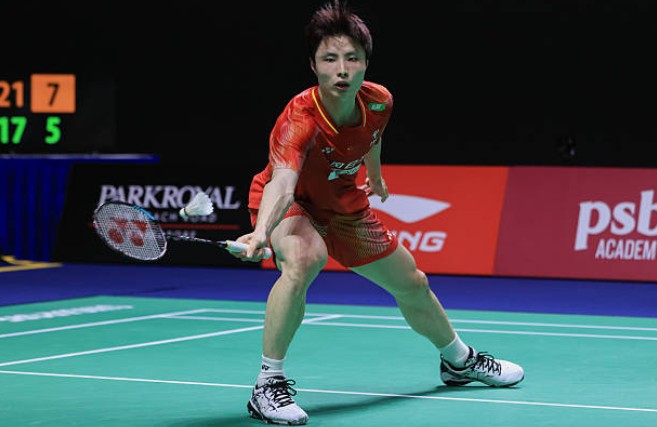
New Delhi: Shi Yu Qi will arrive at the 2026 BWF World Championships carrying the expectations that come with being the reigning men’s singles champion, the world No. 1 and the leading name in China’s title challenge.
The World Championships will be held from August 17 to 23 at the Indira Gandhi Indoor Stadium in New Delhi, placing the sport’s biggest individual prize back in India for the first time since the memorable 2009 edition in Hyderabad.
For Shi, the task appears straightforward on paper: defend the title he won in Paris and confirm his position at the top of men’s singles badminton. In reality, the challenge could be far more complicated.
India’s previous World Championships produced a long list of unexpected results involving some of the greatest players of that era. That history has already created an intriguing question ahead of New Delhi: will the 2026 tournament produce another wave of surprises, or can Shi Yu Qi bring stability to an unpredictable draw?
Shi Yu Qi Returns as Defending World Champion
Shi enters the tournament in a position he had pursued for much of his career. After several near misses and major setbacks, he finally captured his first World Championships gold medal in Paris in 2025.
That victory removed one of the biggest unanswered questions surrounding his career. He is no longer chasing a first world title. This time, he must protect it.
Technically, Shi has everything required to win again. His court coverage is efficient, his shot selection is measured, and his ability to switch between patient construction and sudden attack makes him difficult to read.
He has also become more composed in long matches. In earlier stages of his career, frustration and physical discomfort could sometimes affect his decision-making. The more experienced version of Shi is generally better at surviving difficult periods without allowing the entire match to slip away.
However, defending a world title brings a different type of pressure. Every opponent enters with less to lose, while every difficult rally, slow start or physical issue will attract immediate attention.
India’s 2009 World Championships Produced Major Upsets
The last World Championships held in India took place in Hyderabad in 2009. That tournament remains one of the more unpredictable editions in recent badminton history.
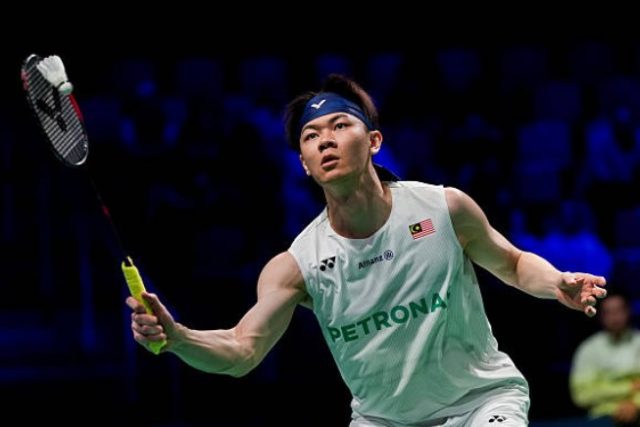
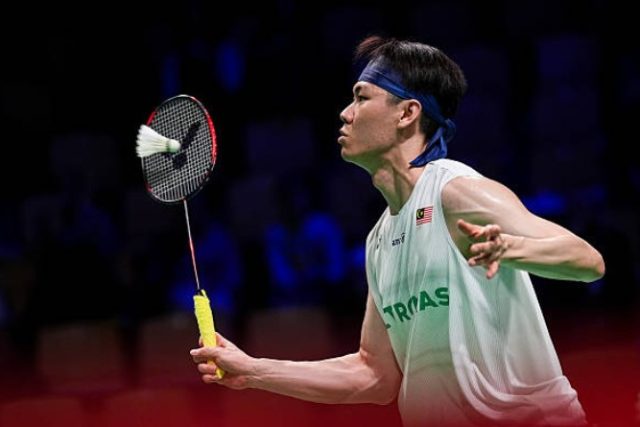
Malaysia’s Lee Chong Wei entered as the world No. 1 and top seed but was eliminated in the quarterfinals by Indonesia’s Sony Dwi Kuncoro. Sony won the three-game contest 21-16, 14-21, 21-12, ending Lee’s hopes of claiming his first world title.
Indonesia’s Taufik Hidayat also failed to reach the final. The Olympic and former world champion was outplayed by China’s Chen Jin in the semifinals, losing 16-21, 6-21.
Denmark’s Peter Gade pushed Lin Dan in the opening game of their quarterfinal but could not complete the upset, falling 20-22, 16-21.
China’s Bao Chunlai suffered an even earlier exit. The 11th seed was beaten 18-21, 14-21 by Dutch player Dicky Palyama in the opening round.
Lin Dan eventually won the men’s singles title, with Chen Jin finishing runner-up. Even so, the number of prominent players who exited earlier than expected gave the tournament its reputation for unpredictability.
Is There Really an “India Upset Curse”?
Calling it a curse makes for an entertaining badminton storyline, but the results from 2009 do not guarantee that history will repeat itself.
The 2026 tournament will be staged in a different city, a different arena and a completely different era of international badminton. Training methods, sports science, recovery programs and tournament preparation have all developed considerably since 2009.
Still, the earlier results offer a useful reminder: rankings and reputation provide no protection at a World Championships.
Players must adapt quickly to unfamiliar court conditions, shuttle speed, lighting, drift, temperature and crowd pressure. A small adjustment problem can become costly when every match is an elimination contest.
Venue Conditions Could Become Part of the Story
The Indira Gandhi Indoor Stadium came under scrutiny during the 2026 India Open after players and officials raised concerns involving air quality, cleanliness and conditions inside the venue.
A monkey was spotted in a spectator area during the tournament, while another match was temporarily interrupted when bird droppings landed on the court.
Those incidents attracted widespread attention and added to concerns already expressed about pollution, hygiene and the overall playing environment.
The Badminton World Federation acknowledged the feedback but maintained that the Indira Gandhi Sports Complex represented an infrastructure improvement and remained capable of hosting major international competition. The federation also indicated that further work would be carried out before the World Championships and that some seasonal problems experienced in January were not expected to be as severe in August.
That distinction is important. Conditions at the India Open should not automatically be treated as a preview of what players will face during the World Championships.
However, venue preparation will remain closely watched. At an event of this level, athletes must be able to focus on performance rather than distractions away from the rallies.
New Delhi’s Weather Adds Another Preparation Question
New Delhi has experienced periods of intense heat and humidity during the summer. In mid-July, the city recorded temperatures near 37 degrees Celsius, with the heat index climbing much higher because of humidity.
The World Championships will be played indoors and more than a month later, so July weather cannot be used as a direct forecast for tournament week.
Nevertheless, travel, recovery, hydration and movement between hotels, training halls and the competition venue may still require careful planning. Teams that arrive early and adapt efficiently could gain a small but meaningful advantage.
For Shi Yu Qi, managing energy will be especially important. A World Championships title run can involve several demanding matches in succession, with very little room for physical decline.
Shi Yu Qi’s Biggest Challenge May Be Adaptation
Shi’s rivals will naturally receive most of the attention when the draw is released, but his most important battle may be controlling the variables around him.
He will need to adjust quickly to shuttle speed, court drift and the rhythm of the arena. He must also handle the pressure of being the defending champion without becoming too cautious.
Shi is at his best when he plays with controlled aggression. If he becomes overly patient, opponents can settle into rallies. If he attacks too early, he risks wasting energy and offering counterattacking opportunities.
The ideal balance will be to dictate without rushing, particularly against players who are comfortable extending rallies and testing his movement.
Indonesian and Danish Challengers Could Threaten
The men’s singles field will contain several players capable of taking advantage of any weakness shown by the defending champion.
Indonesia traditionally produces players who are comfortable in long, tactical contests and emotionally charged arenas. Danish contenders also bring experience, physical strength and the confidence to challenge the highest-ranked players.
Other leading players from Asia, Europe and North America will enter New Delhi believing they can make a deep run. The World Championships format leaves no opportunity to recover from one poor performance.
That is what makes the event so dangerous for every favorite. A player does not necessarily need to outperform Shi across an entire season. He only needs to be better on one particular day.
Why Shi Yu Qi Remains the Leading Favorite
Despite the uncertainty surrounding the venue and the strength of the field, Shi deserves to begin as the leading contender.
He is the defending champion, currently sits at the top of the world rankings and has developed into a more complete player than the one who previously struggled to close out the biggest titles.
His experience should also help him manage the tournament’s emotional demands. He understands how quickly momentum can change at a World Championships and how important it is to remain patient during difficult matches.
The central question is not whether Shi has enough talent to defend his title. He clearly does.
The question is whether he can reproduce his best badminton while managing unfamiliar conditions, rising opponents and the pressure of carrying the No. 1 seed.
Can Shi Yu Qi Avoid Another Upset-Filled Chapter?
The memories of 2009 give the 2026 World Championships an additional layer of intrigue, but Shi Yu Qi will not be competing against history or superstition.
He will be competing against the draw, the arena, his physical condition and a group of ambitious opponents who see the tournament as their opportunity to create a career-defining moment.
If Shi adapts quickly and maintains the composure that carried him to the 2025 title, he has every chance to defend his crown.
If he starts slowly or struggles with the conditions, New Delhi could produce another surprise.
That uncertainty is precisely what makes the World Championships one of the most compelling events in badminton.