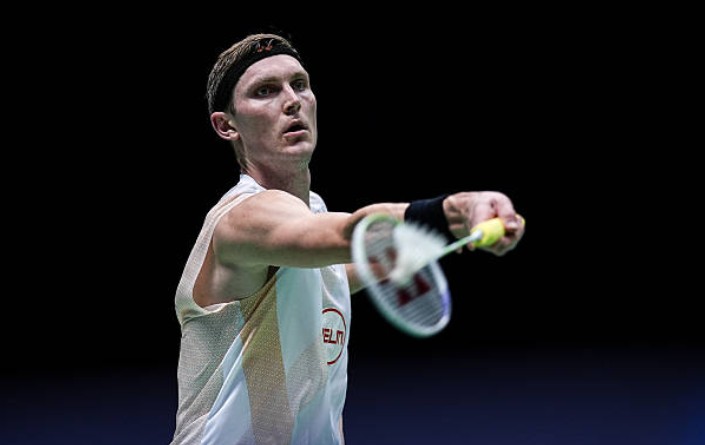
Copenhagen: Denmark’s two-time Olympic champion Viktor Axelsen has offered a rare and insightful look into the current state of global badminton, describing a major shift in the men’s singles landscape while also identifying key contenders for the next Olympic Games.
Speaking during a recent interview as he continues his recovery from injury, Axelsen provided a detailed assessment of how the sport has evolved — particularly in men’s singles, where dominance has given way to depth, unpredictability, and fierce competition.
A New Era in Men’s Singles Badminton
For years, men’s singles badminton was often defined by clear dominant figures — players who consistently controlled the biggest tournaments. However, according to Axelsen, that era is rapidly changing.
“The level across the top players is incredibly close right now,” Axelsen explained. “If you look at the top 15 in the world rankings, almost every player has the ability to reach the later stages of major tournaments.”
This statement reflects a broader trend in modern badminton: the gap between the very top players and the chasing pack has narrowed significantly. Instead of one or two dominant champions, the sport now features a deep pool of elite athletes capable of beating each other on any given day.
From a competitive standpoint, this shift has made tournaments far more unpredictable. Early-round upsets are becoming more common, and even top seeds can no longer rely on rankings alone to secure deep runs.
For fans, however, this new era represents a golden period for badminton — one where every match carries genuine uncertainty and excitement.
Rising Stars and Key Contenders
Axelsen highlighted several players who exemplify this new competitive landscape. Among them are China’s Shi Yuqi, Thailand’s Kunlavut Vitidsarn, and Denmark’s Anders Antonsen.
Each of these players brings a unique style and strength to the court. Shi Yuqi is known for his technical precision and ability to control rallies, while Antonsen’s aggressive play and tactical intelligence make him a constant threat. Meanwhile, Kunlavut has emerged as one of the most promising young talents in men’s singles, combining composure with exceptional shot-making ability.
What stands out in this group — and in the broader top 15 — is consistency at a high level. Players are no longer defined by occasional breakthroughs but by their ability to repeatedly challenge for titles across multiple tournaments.
This depth of talent has fundamentally reshaped how success is measured in badminton. Winning a single major title is no longer enough to establish dominance; instead, sustained performance across the season has become the true benchmark.
The Physical and Mental Demands of Modern Badminton
Another key factor behind this shift is the increasing physical and mental demands of the sport. The modern badminton calendar is packed with high-level tournaments, leaving players with little time for recovery.
From Super 500 events to Super 1000 tournaments, elite players are required to compete almost continuously throughout the season. This intense schedule places enormous strain on their bodies, making injury management and recovery critical components of success.
Axelsen himself is currently navigating this reality as he works his way back from injury. His experience highlights the importance of strategic scheduling — choosing which tournaments to play and which to skip in order to maintain peak performance.
In this environment, the players who succeed are not just the most talented, but also the most disciplined in managing their physical condition and mental focus.
Olympic Predictions: A New Generation Ready to Rise
Looking ahead to the next Olympic Games, Axelsen offered his early predictions for potential gold medal winners — and his selections reflect the changing dynamics of badminton.
In women’s singles, he identified South Korea’s An Se Young as a leading contender. Known for her consistency, speed, and exceptional court coverage, An has quickly established herself as one of the most dominant players on the women’s tour.
Her ability to maintain composure under pressure and execute precise strategies has made her a formidable opponent in major tournaments. As the Olympic cycle progresses, she is widely expected to remain one of the favorites for gold.
In men’s singles, Axelsen pointed to Thailand’s Kunlavut Vitidsarn as a strong candidate for Olympic success. Still relatively young, Kunlavut has already demonstrated his ability to compete at the highest level, with performances that suggest he is ready to take the next step.
His calm demeanor on court, combined with his technical skill and tactical awareness, has drawn comparisons to some of the sport’s great champions. More importantly, his steady improvement indicates that his peak may still be ahead of him.
Axelsen’s endorsement of Kunlavut is particularly significant given the current depth of competition. In a field where many players are capable of winning, identifying a standout contender reflects a strong belief in the Thai player’s potential.
What This Means for the Future of Badminton
The insights shared by Axelsen offer a clear picture of where badminton is heading. The sport is entering an era defined not by individual dominance, but by collective excellence.
This evolution has several important implications. First, it raises the overall standard of play, as athletes are pushed to continuously improve in order to remain competitive. Second, it increases the global appeal of badminton, as more countries produce top-level players capable of winning major titles.
Perhaps most importantly, it ensures that the sport remains exciting and unpredictable. For fans, this means more high-quality matches, more dramatic upsets, and more storylines to follow throughout the season.
As Axelsen continues his recovery and prepares for his return to competition, he remains a central figure in this evolving landscape. Whether he can reassert himself as a dominant force or must navigate the same competitive challenges as his peers will be one of the key narratives in the coming years.
One thing is certain: the future of badminton has never been more competitive — or more compelling.