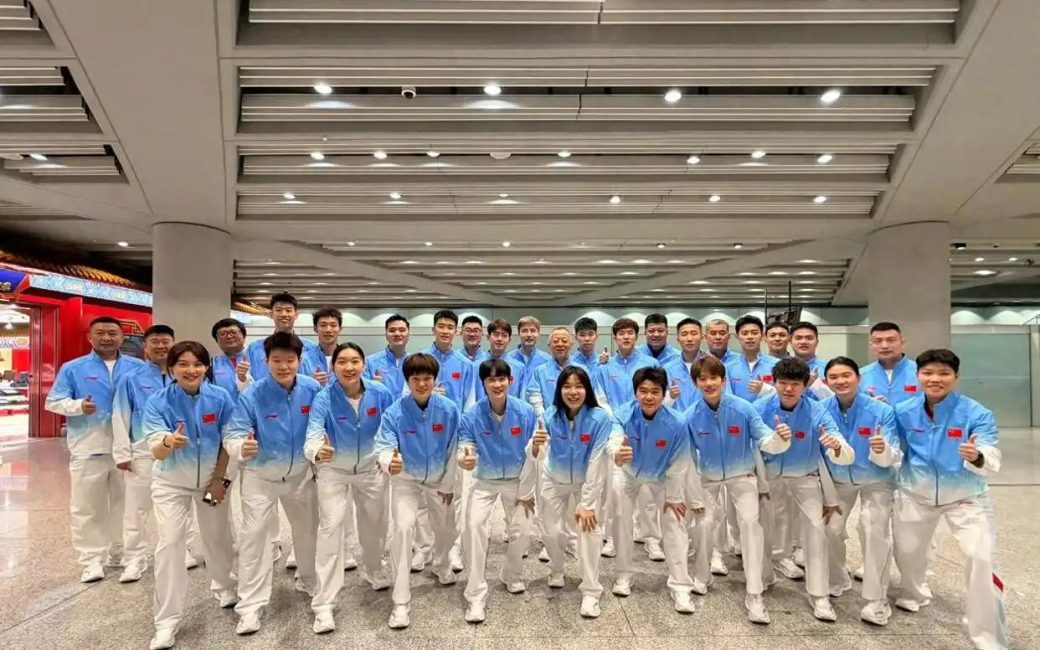
Nagoya, Japan: China’s badminton team encountered an unexpected problem before even reaching the court at the 2026 Aichi-Nagoya Asian Games, with transportation delays at the airport forcing players and officials to find alternative ways to reach their accommodation.
According to reports from the scene, several international delegations arriving in Nagoya experienced lengthy waits after official Asian Games shuttle services failed to operate as expected.
With buses delayed and no clear departure time available, athletes from multiple countries and sports were left waiting at the airport shortly after arriving in Japan.
China’s badminton delegation was among those affected, but rather than continue waiting indefinitely, the team began arranging its own transportation to the hotel.
China Badminton Team Caught in Nagoya Airport Transport Disruption
The original plan was straightforward: after arriving in Japan, the Chinese badminton squad would take an official Asian Games shuttle directly from the airport to the team hotel.
That plan quickly fell apart.
The designated transportation reportedly failed to arrive on schedule, while staff and volunteers at the airport were unable to provide a firm departure time or immediate alternative.
Other Chinese sports teams, including gymnastics and table tennis delegations, were also reportedly affected by the transportation difficulties.
For athletes preparing for one of the biggest events of the season, spending several hours waiting at an airport was far from ideal.
Chinese Badminton Players Arrange Their Own Transportation
China’s badminton team decided not to continue waiting without a clear solution.
Accustomed to traveling around the world for BWF tournaments, the players and staff quickly began looking for alternative transportation.
The first option was to use a public airport bus.
However, with a large traveling delegation, there were not enough available seats for the entire group.
The team therefore split its transportation plan. Some players and staff were able to leave the airport using public buses, while the remaining members stayed behind to arrange another option.
Chinese Consulate Staff Help Remaining Players Leave Airport
The remaining members of the badminton delegation later received assistance from staff connected with the Chinese Consulate-General in Nagoya.
Local transportation resources were coordinated and additional vehicles were arranged for the group.
By around 4:30 p.m., the remaining Chinese badminton players and officials were reportedly able to leave the airport and travel safely to their accommodation.
The episode created an unwanted disruption to China’s Asian Games preparations, but the team was ultimately able to resolve the situation without allowing the transportation problem to consume the entire day.
China Turns Attention Back to Asian Games Badminton
With the airport problems behind them, attention now shifts back to badminton.
One of China’s biggest priorities in Nagoya will be the women’s team competition, where the squad is determined to improve on recent Asian Games results.
Veteran women’s doubles star Jia Yi Fan said the team has made a conscious decision to place greater emphasis on winning the women’s team title rather than dividing too much energy between team and individual competitions.
For Jia, who is appearing at another Asian Games after experiencing previous disappointments in the team event, the objective is clear: China wants the gold medal.
South Korea Remains China’s Biggest Women’s Team Threat
South Korea is expected to present one of the toughest obstacles to China’s title ambitions.
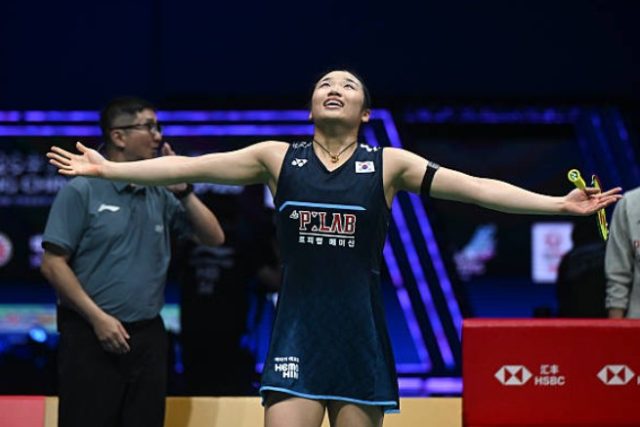
The Korean squad is led by women’s singles world No. 1 An Se Young, giving South Korea an enormous advantage in one of the most important matches of a team tie.
Korea also has considerable depth in women’s doubles and the flexibility to change combinations depending on the opponent.
China has struggled against the Koreans in several important team encounters in recent years, making the matchup one of the most closely watched possibilities at the Asian Games.
Huang Dong Ping and Wei Ya Xin Could Be China’s X-Factors
One of the more interesting elements of China’s women’s team strategy is the inclusion of Huang Dong Ping and Wei Ya Xin.
Both are best known internationally for mixed doubles, but their presence gives China additional options if coaches want greater flexibility in the doubles lineup.
Jia described the pair as potential “X-factors” who could give the team different tactical combinations rather than relying exclusively on its established women’s doubles partnerships.
That flexibility could become important in a team competition where lineup decisions can determine the outcome of an entire tie.
Huang Dong Ping Brings Olympic Experience
Huang Dong Ping brings enormous big-match experience to the squad.
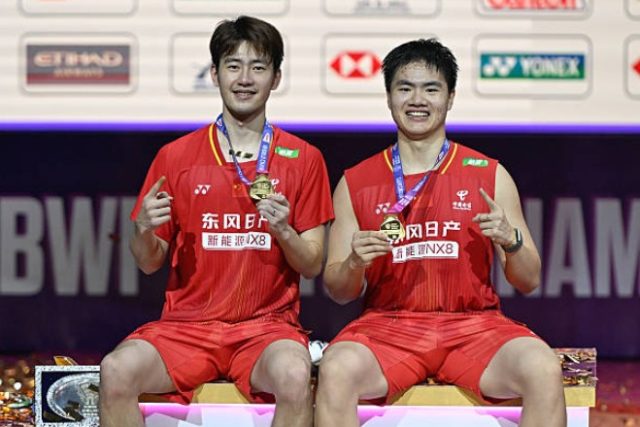
The Olympic champion has spent years competing at the highest level of international badminton and is known for her front-court awareness, defensive ability and tactical adaptability.
Although mixed doubles remains her primary discipline, those qualities could also give China additional options in a women’s doubles setting if required.
Her experience under pressure could be particularly useful if China reaches another close tie against South Korea.
Wei Ya Xin Adds Youth and Attacking Energy
Wei Ya Xin offers a different profile.
She has already established herself as one of China’s leading younger mixed doubles players and brings speed, attacking ability and energy to the lineup.
Having Huang and Wei available gives China more possibilities when coaches consider how to construct the second doubles point or respond to an unexpected matchup.
That tactical flexibility could become valuable against a Korean team capable of changing its own combinations.
Jia Yi Fan Wants Women’s Team Gold After Previous Near Misses
For Jia, the motivation is also personal.
China has fallen short of the women’s team gold medal at the previous two Asian Games, finishing runner-up on both occasions.
That history means Nagoya represents another opportunity for the veteran to finally stand on top of the Asian Games podium in the team competition.
This time, China appears determined to concentrate more of its energy on the team event rather than asking every leading player to divide attention equally between team and individual goals.
China Needs Singles Players to Hold Their Ground
China’s doubles options may be deeper, but the women’s team title cannot be won through doubles alone.
Chen Yu Fei and Wang Zhi Yi will carry significant responsibility in singles, particularly if China meets a South Korean lineup led by An Se Young.
An enters the Asian Games in extraordinary form and represents one of the most difficult individual points for any opponent to overcome.
That makes China’s remaining singles and doubles matches even more important.
If the Chinese singles lineup can keep a tie close, the depth and flexibility in doubles could become decisive.
China-South Korea Rivalry Could Decide Women’s Team Gold
A potential China-South Korea showdown would feature two of the deepest women’s badminton programs in the world.
South Korea has the advantage of An Se Young at the top of its singles lineup, while China has considerable overall depth and several possible doubles combinations.
The result could therefore depend on tactical lineup decisions as much as individual rankings.
That is precisely why China has added players such as Huang Dong Ping and Wei Ya Xin to the available options.
Airport Problems Provide Unexpected Start to Asian Games
China certainly did not expect its first challenge in Nagoya to involve finding transportation from an airport.
But after several hours of uncertainty, the badminton delegation found a way to move forward and reach its accommodation.
The incident is unlikely to have any lasting significance if players recover quickly and return to their normal preparation schedule.
What matters now is how China performs once competition begins.
China Women Enter Nagoya With One Clear Goal
For the women’s team, that objective is gold.
After two consecutive Asian Games silver medals, China is approaching the 2026 competition with a stronger emphasis on the team event and greater tactical flexibility in doubles.
Jia Yi Fan’s experience, the addition of Huang Dong Ping and Wei Ya Xin, and the presence of elite singles players give China plenty of options.
South Korea, however, remains a formidable opponent, particularly with An Se Young leading the lineup.
China’s first battle in Nagoya may have been against transportation problems at the airport. The much more important battles are about to begin on the badminton court.