Beijing, China: China’s badminton program could be entering a significant period of adjustment following a difficult 2026 Aichi-Nagoya Asian Games, with coaching roles, player development and several doubles combinations reportedly under review.
China finished the Games with two gold, three silver and three bronze medals, a noticeable drop from the four gold medals won at the previous Asian Games in Hangzhou.
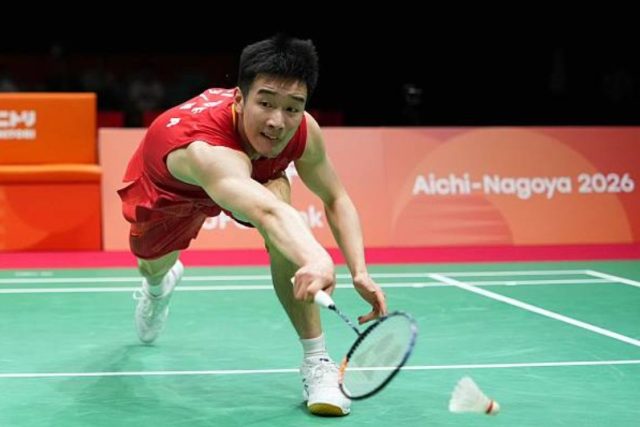
The men’s singles result was particularly disappointing. China failed to place a player on the podium for the first time since beginning its Asian Games participation in 1974, while the men’s team also surrendered a 2-0 lead before losing the final to Indonesia.
Coaching Structure Could Be First Area Reviewed
Much of the post-Games discussion has centered on China’s coaching setup.
Reports suggest the national team could review responsibilities across several departments, with greater emphasis expected on match preparation, tactical adjustment, player development and the management of younger talent during the next Olympic cycle.
The Asian Games exposed areas where China struggled to respond once opponents changed tactics, particularly in men’s singles and several high-pressure doubles matches.
Any restructuring, however, has yet to be fully confirmed by the Chinese Badminton Association.
China Men’s Singles Faces Generational Transition
Men’s singles appears to be one of the departments facing the most scrutiny.
Shi Yuqi and Li Shifeng both exited before the medal rounds in Nagoya, leaving China without a men’s singles medal after decades of uninterrupted success at the Asian Games.
The result has intensified discussion over how quickly China should move toward a younger generation that includes players such as Weng Hong Yang, Wang Zheng Xing, Hu Zhe An and other emerging prospects.
Lu Guang Zu Missing From Kumamoto Masters Entry List
Another point attracting attention is the absence of Lu Guang Zu from the entry list for the 2026 Kumamoto Masters Japan in November.
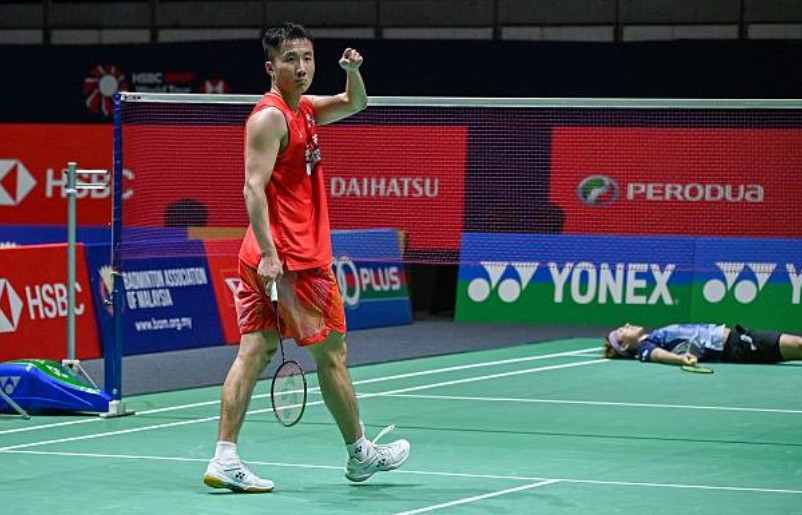
The 29-year-old has been one of China’s most dependable men’s singles players for several seasons, often providing depth in both individual and team competitions.
His absence has fueled speculation that his role within the national setup may be changing as China begins planning for the next Olympic cycle.
However, there has been no official confirmation that Lu is retiring, and his future should not be treated as settled unless either the player or the Chinese Badminton Association makes an announcement.
Younger Chinese Men’s Singles Players Could Receive More Opportunities
The Kumamoto Masters entry list itself points toward greater opportunities for younger players.
Li Shifeng is currently the leading established Chinese men’s singles player entered directly in the main draw, while Hu Zhe An, Dong Tian Yao and Zhu Xuan Chen are scheduled to begin from qualifying.
That creates an important test for China’s next generation at BWF World Tour Super 500 level.
Feng Yan Zhe-Huang Dong Ping Future Under Discussion
Mixed doubles could also see experimentation.
Feng Yan Zhe and Huang Dong Ping remain one of China’s leading combinations, but reports and fan discussion have raised the possibility of coaches testing alternative partnerships during the new cycle.
Such an approach would not necessarily mean a permanent split. China has regularly used temporary combinations in training and selected tournaments to examine different tactical options.
Jiang Zhen Bang and Wei Ya Xin are also expected to remain an important part of the mixed doubles structure as China continues to develop depth behind its top pairings.
China Could Experiment Further in Men’s Doubles
The men’s doubles department is already showing signs of experimentation.
At the upcoming Kumamoto Masters, Liang Wei Keng is entered with Hu Ke Yuan, while Wang Chang is scheduled to partner Xie Hao Nan rather than Liang.
Those combinations suggest China is willing to test different pairings instead of relying exclusively on established partnerships.
He Ji Ting, Ren Xiang Yu, Chen Bo Yang and Liu Yi also give the coaching staff several options when assessing different styles and combinations.
Why China Is Testing New Pairings
Modern men’s doubles has become increasingly difficult to dominate with one fixed style.
South Korea and Indonesia continue to produce powerful combinations, while India, Malaysia and other countries have also become serious threats at major tournaments.
Rotating players can help coaches understand which combinations work best against different opponents and provide more flexibility for team competitions.
The approach also gives younger players valuable experience alongside established stars.
Asian Games Results Increase Pressure for Change
China remains one of the strongest badminton nations in the world, but the Aichi-Nagoya results highlighted how competitive the international field has become.
Thailand continues to produce high-level singles players, Indonesia remains dangerous across men’s events, and South Korea has developed exceptional strength in both singles and doubles.
Against that backdrop, China can no longer depend solely on past structures or established names.
The next stage is likely to involve more competition within the squad, greater opportunities for younger players and continued experimentation with doubles combinations.
Kumamoto Masters Could Offer First Clues
The 2026 Kumamoto Masters Japan, scheduled for November 10-15, could provide an early indication of China’s direction after the Asian Games.
Shi Yuqi is not entered, Lu Guang Zu is also absent, and several younger men’s singles players will attempt to qualify for the main draw.
China is also testing new men’s doubles partnerships while retaining major title contenders in women’s singles, women’s doubles and mixed doubles.
For now, talk of coaching replacements, retirement decisions and permanent partnership changes remains partly speculative. What is clear is that China’s badminton program has entered an important evaluation period as it begins preparing for the next Olympic cycle.