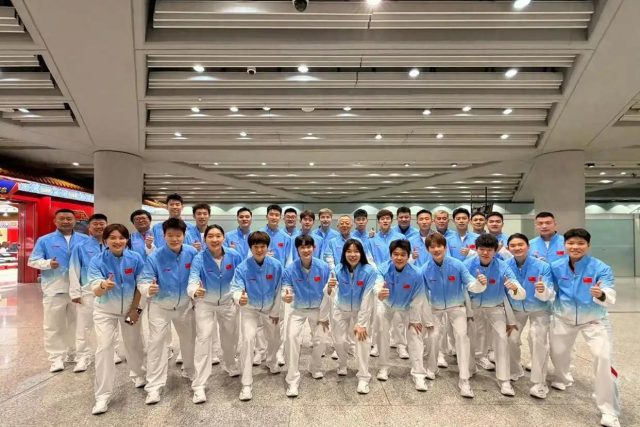
China: The Chinese badminton team is heading to the 2026 Aichi-Nagoya Asian Games with a more measured outlook than in previous major championships, with expectations centered on winning around two gold medals.
China has traditionally entered the Asian Games expecting to challenge across virtually every badminton discipline, but the situation is different this time.
Major coaching changes, injuries to key players and inconsistent results in several singles events have forced the team to adopt a more selective approach. Its strongest gold-medal opportunities appear to be concentrated in the men’s team event, women’s doubles and mixed doubles.
China Badminton Enters Asian Games During Period of Change
One of the biggest differences from the previous Olympic cycle is the composition of China’s coaching team.
Several coaching responsibilities have changed, leaving the new structure with limited time to establish itself before one of Asia’s biggest sporting events.
The challenge extends far beyond technical preparation.
Coaches must manage player fitness, make difficult lineup decisions in the team competition and ensure the squad remains mentally prepared through a demanding Asian Games schedule.
Rather than expecting every discipline to challenge for gold, China appears prepared to concentrate its resources on events where its current strength and depth offer the best opportunities.
Injuries Complicate China’s Asian Games Preparation
Fitness has become another major concern heading into Aichi-Nagoya.
China’s leading men’s singles player Shi Yuqi has dealt with physical problems and inconsistent form throughout the season.
His early exit at the recent World Championships added to concerns surrounding China’s men’s singles department.
Li Shifeng and Weng Hongyang have also struggled to produce consistent results at major tournaments, with all three Chinese men failing to reach the World Championships quarterfinals.
The situation became more complicated shortly before the Asian Games when men’s doubles player Chen Boyang was forced to withdraw because of a physical problem.
He Ji Ting was subsequently brought into the squad to partner Liu Yi, creating another late change for China’s doubles lineup.
Women’s Singles Also Faces Difficult Road
China remains strong in women’s singles, but winning the Asian Games title will not be straightforward.
Chen Yu Fei and Wang Zhi Yi have both carried heavy competitive schedules, while physical condition and accumulated fatigue remain factors heading into the Games.
The international field is also exceptionally strong.
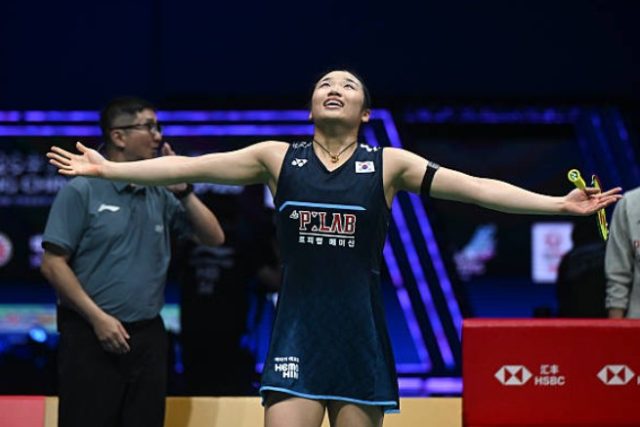
South Korea’s An Se Young continues to set the standard in women’s singles, while Japan’s Akane Yamaguchi remains one of the most accomplished players in world badminton.
That makes women’s singles a realistic medal opportunity for China, but far less predictable as a gold-medal event.
Men’s Team Could Be China’s Biggest Gold Opportunity
The men’s team competition is expected to be one of China’s main priorities.
China enters as the defending Asian Games men’s team champion after winning the title at Hangzhou 2023.
However, retaining the championship in Japan could prove difficult.
India and Indonesia both possess enough singles and doubles depth to challenge China in the five-match team format.
India’s singles strength gives it the ability to put immediate pressure on China, while Indonesia has considerable depth across both men’s singles and doubles.
China’s margin for error could therefore be small.
Liang Wei Keng-Wang Chang Crucial to China’s Men’s Team
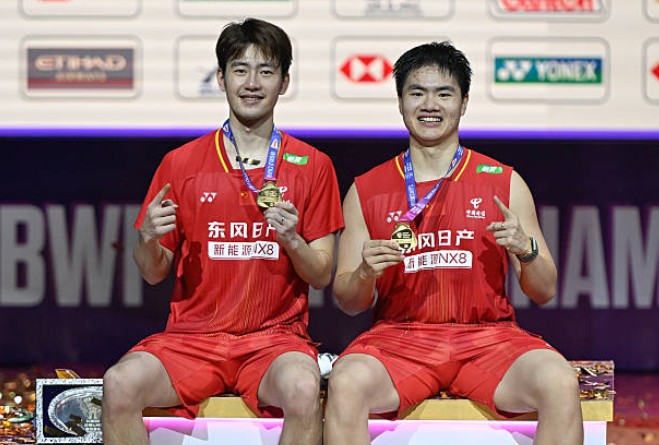
Much could depend on newly crowned world champions Liang Wei Keng and Wang Chang.
The Chinese pair won the men’s doubles world title in New Delhi after defeating Malaysia’s Aaron Chia and Soh Wooi Yik 21-17, 21-16 in the final.
Their form gives China an important point in the team competition.
If Shi Yuqi, Li Shifeng or China’s other singles representatives surrender matches, the pressure on Liang and Wang — and the second doubles combination — could increase considerably.
For that reason, the men’s team event represents a genuine gold opportunity, but not one China can take for granted.
Women’s Doubles Remains One of China’s Strongest Events
Women’s doubles may be China’s deepest individual discipline entering the Asian Games.
Liu Sheng Shu and Tan Ning remain among the leading pairs in international badminton, while Jia Yi Fan and Zhang Shu Xian give China another experienced championship-level combination.
The two pairs provide China with both depth and tactical flexibility.
South Korea is likely to provide the biggest challenge, with its leading combinations capable of defeating the Chinese pairs on the right day.
Nevertheless, women’s doubles remains one of China’s clearest opportunities to capture an individual gold medal.
Mixed Doubles Gives China Another Strong Gold-Medal Chance
Mixed doubles has long been one of China’s strongest badminton disciplines, and that remains the case in Aichi-Nagoya.
World No. 1 Feng Yan Zhe and Huang Dong Ping will carry significant expectations, while Jiang Zhen Bang and Wei Ya Xin provide China with another high-level combination.
Both pairs possess strong front-court control, quick attacking transitions and considerable experience against the world’s leading partnerships.
Thailand, South Korea and several other countries will present difficult opposition, but China should again be among the strongest mixed doubles contenders.
Men’s Singles Gold Looks Much Harder
China’s men’s singles situation is far less comfortable.
Shi Yuqi has endured a difficult period, while Li Shifeng and Weng Hongyang have struggled for consistency in important tournaments.
The competition across Asia has also become much deeper.
Indonesia, Thailand, Japan, India, Chinese Taipei, Singapore and other nations all possess players capable of defeating China’s leading singles representatives.
China can still challenge for medals, but the discipline no longer offers the same sense of security it once did.
Men’s Doubles Has Strength but Little Margin for Error
Liang Wei Keng and Wang Chang enter as world champions, but men’s doubles remains one of the most unpredictable disciplines in international badminton.
South Korea, Indonesia, Malaysia and India all possess combinations capable of winning major titles.
China also has to deal with the late change involving Chen Boyang, with He Ji Ting stepping in to partner Liu Yi.
That leaves Liang and Wang as China’s clearest men’s doubles title threat, but a world championship gold medal does not guarantee success in a demanding Asian Games draw.
China Taking More Realistic Approach to Medal Expectations
The overall picture is therefore very different from eras when China could realistically expect to challenge for gold in almost every discipline.
The team still possesses extraordinary depth, but injuries, coaching changes and increasingly strong Asian opposition have reduced the margin for error.
China’s strongest gold-medal opportunities appear to lie in three areas:
- Men’s team: Defending champions, but vulnerable if the singles lineup drops too many points.
- Women’s doubles: Strong depth through Liu Sheng Shu-Tan Ning and Jia Yi Fan-Zhang Shu Xian.
- Mixed doubles: Feng Yan Zhe-Huang Dong Ping and Jiang Zhen Bang-Wei Ya Xin provide two elite combinations.
Other disciplines remain capable of producing medals, but winning gold could require China’s players to outperform their recent form.
Aichi-Nagoya Will Test China’s New Badminton Structure
The Asian Games will also provide an important examination of China’s new coaching setup.
Technical preparation is only one part of the task.
The coaching team will need to manage player workloads, respond quickly to changing match situations and make effective lineup decisions during the team competition.
That becomes even more important with several players managing physical concerns after a demanding international schedule.
Two Gold Medals Would Represent a Different Standard for China
For most badminton nations, winning two Asian Games gold medals would be considered an outstanding result.
For China, a country accustomed to dominating the sport for decades, it would represent a more modest expectation.
But the current circumstances make a more realistic approach understandable.
The goal is no longer simply to dominate every discipline. It is to protect the events in which China remains strongest while giving players in more uncertain disciplines an opportunity to compete for medals without unrealistic expectations.
China Begins Asian Games With Something to Prove
The Aichi-Nagoya Asian Games arrive at an important moment for Chinese badminton.
Recent World Championships results exposed weaknesses, particularly in singles, while injuries and coaching changes have created additional uncertainty.
At the same time, China still possesses world champions, world No. 1 combinations and considerable depth in doubles.
If Liang Wei Keng-Wang Chang can provide stability in the men’s team, Liu Sheng Shu-Tan Ning and Jia Yi Fan-Zhang Shu Xian deliver in women’s doubles, and Feng Yan Zhe-Huang Dong Ping or Jiang Zhen Bang-Wei Ya Xin perform to expectations in mixed doubles, China remains capable of leaving Japan with multiple titles.
The difference this time is that nothing appears guaranteed.
China heads into Aichi-Nagoya with a more cautious target, a reshaped coaching structure and several health concerns — making the 2026 Asian Games one of the most important tests of the country’s current badminton generation.